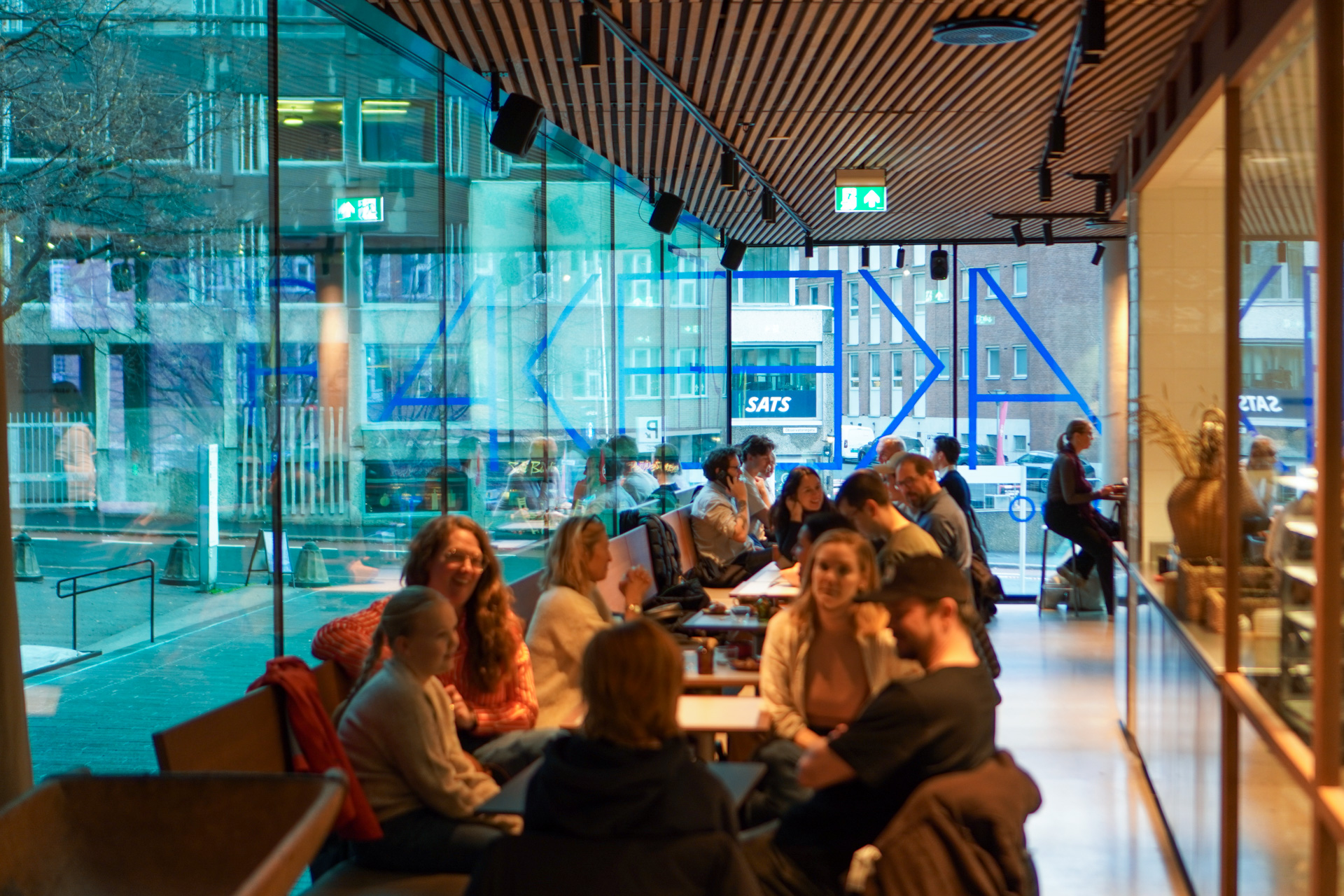
In Oslo’s café and bakery scene, the opening of Bakeriet ved Credo (Credo Bakery) by late autumn 2025 is a landscape-changing event. This is one of the chain reactions triggered when Heidi Bjerkan, arguably Norway’s most renowned chef, decided to move her Michelin-starred restaurant, Credo, from Trondheim to the Norwegian capital.

Born in 1970 in Trondheim, Bjerkan has a stellar career behind her. Despite her youthful dream of becoming a pilot, Bjerkan was quickly attracted to the high-paced restaurant business. After becoming a professional chef, she worked in a series of renowned restaurants, including Claridge’s in London and the cruise ship Queen Elizabeth .

In 1998, she opened restaurant Credo in Trondheim, before taking the job as the chef for the Norwegian Royal Family, where she worked from 2006 to 2013. Returning to Credo in 2013, Bjerkan moved the restaurant in 2018 to a new location in Lilleby, Trondheim. One year later, Credo was awarded one Michelin star and won Michelin’s first-ever “Sustainable Restaurant of the Year”—a concept that later evolved into the Michelin “Green Star.”
In 2023, Bjerkan decided to shut down the restaurant in Trondheim and move it to a new location inside the Norwegian National Library. A couple of months after the opening of the bakery, the brand-new Credo opened its doors to its first batch of guests in Oslo.
Located on the ground floor by the entrance of a side building annexed to the National Library, the bakery features a square-shaped open space created by large glass windows and wooden furniture. The mild colors, simple interior decorations, and abundant natural light create a calm and elegant atmosphere.

What most people did not realize is that there were two separate teams working behind the scenes. On one hand, Credo has assembled a highly talented team of bakers in charge of sourdough bread, including Antoine Bedochaud and Mathilda Cuzon—both of whom worked closely with Ille Brød , one of Oslo’s best sourdough bakeries. In fact, Ille Brød founder and owner Martin Fjeld himself works as an independent consultant for the bakery.

On the other hand, together with Heidi Bjerkan, the restaurant’s American pastry chef Hannah Noelle Holman (who is also the wife of head chef Michael Jiro Holman) developed and executed different types of pastries alongside several varieties of tarts, consistent with the restaurant’s style.

The unifying element that connects the two teams—whether you work on the bread or the pastries—is the emphasis on the grain. “Here, the croissants won’t necessarily be baked using sifted wheat flour—after all, why should they be, when there are so many ancient grain varieties with such valuable nutritional content?” Bjerkan said in an interview with D2 magazine. This is also why Credo plans to bake only with flour produced in their own mills, she said in the same interview.
All tea cups used at Credo came from Heidi Bjerkan's personal collection of traditional Norwegian ceramic. Galette with pear and blackcurrant. Credo is the only café in Oslo that serves coffee brewed with beans from the Trondheim-based Pala coffee roastery.

Back in 2019, Credo was awarded “Sustainable Restaurant of the Year” for its “creative yet unshowy cooking, which is natural in style and respectful of tradition.” It should not come as a surprise that the bakery takes it as its mission to inherit and modernize the Norwegian baking tradition, according to Bjerkan’s interviews with Norwegian media.


All the pastries in the shop are perfectly executed and equally enticing (except maybe their cinnamon buns, which can be a bit too dense and bland), but the idea was best exemplified by their lefse, a traditional soft flatbread originating from Western and Northern Norway. Credo’s modern twist on this traditional pastry features a rich filling of Røros butter mixed with miso caramel, dusted with cranberry powder. It results in a deep, long-lasting savory flavor and a strong contrast between the moist filling and the thin, dry surface of the bread. With such a sophisticated flavor profile, who could refrain from painting a mental picture of West Norway’s harsh, rocky coastline and wind-beaten terrain?
Hazelnut and coffee tart Their “Berlinerbolle”, with its rich and creamy filling, is one of their first items that attracted widespread attention on social media. “Fastelavnsbolle” with raspberry jam.


Yet when it comes to a bakery and restaurant like Credo, one needs to look beyond mere techniques and flavor profiles to appreciate the ideas and philosophy looming behind them. The name “Credo”, as Bjerkan would remind you, means “I believe” in Latin. One of the first things she teaches young chefs in her kitchen, according to people who have worked with her, is to get to know the land. “If you do not understand the soil, you do not understand the ingredients,” she once said. It is this inherent devotion and respect for the land, the tradition, and the people that makes Credo so special, so unique, yet still so wonderfully approachable and so profoundly moving.