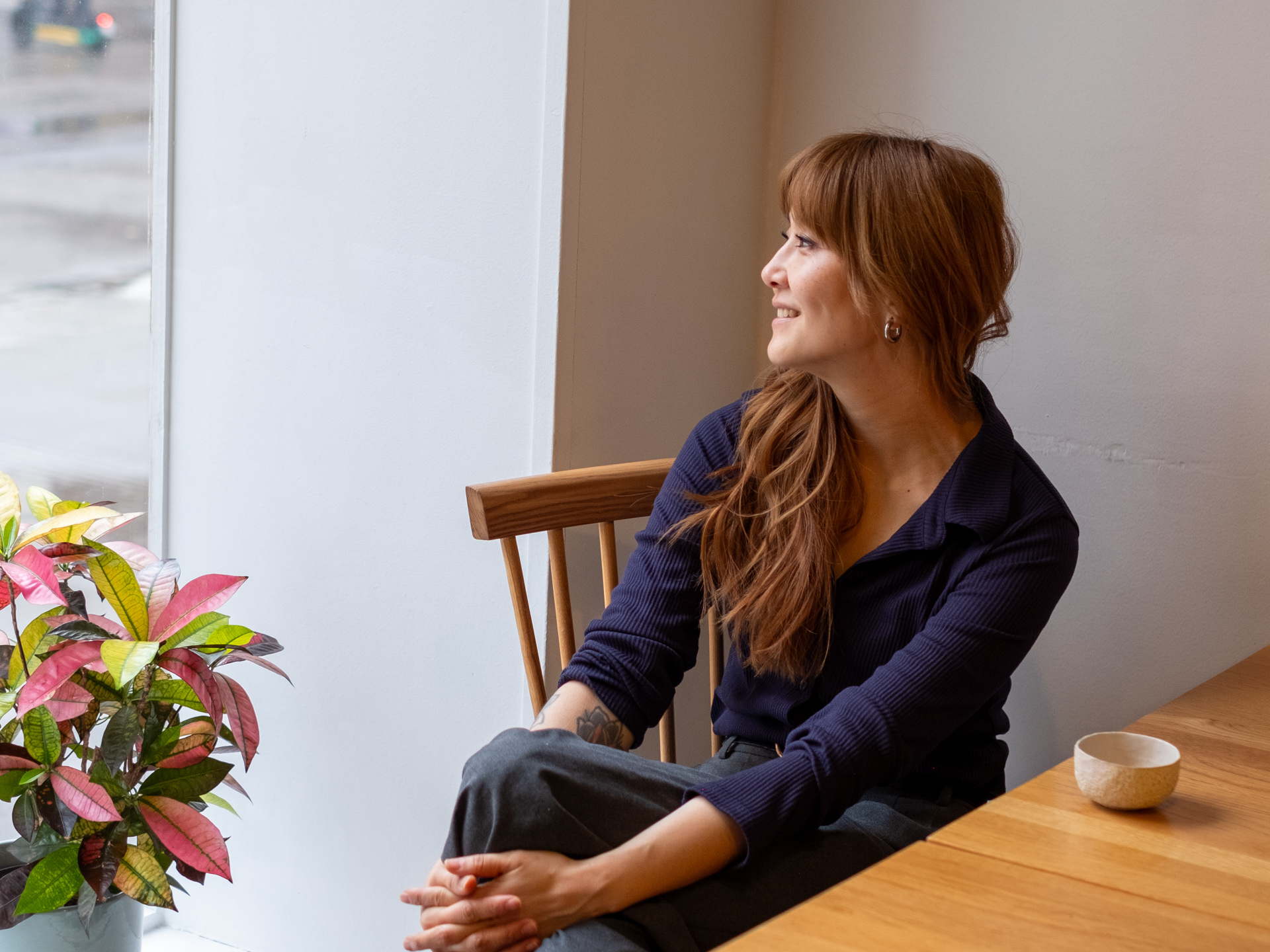
Asian, Norwegian, single mum and entrepreneur — Sandra Kristiansen juggles a multitude of roles and identities. This is the story of how she built one of the most unique cafés and restaurants in Oslo.
When Luke Henderson and Sandra Kristiansen decided to name their restaurant “The Little Pickle”, no one realised he would be stuck so literally in this Shakespearean metaphor. By May 2021, they had worked together for four years, and they were about to open a restaurant of their own. It was a busy and stressful period: the Covid-19 pandemic, social distancing, vaccines, lockdowns — society at a complete standstill. Yet they still managed to find a good location, did all the renovations and carpentry themselves, while cooking cheap food they bought from the supermarket in a kitchen they were building up little by little. Those were also days of hope: they found talented people ready to come in and work, and this would be “a kitchen with a simple, flat hierarchy, where there is no shouting, no yelling, no ‘Yes, chef!’”, Kristiansen said.
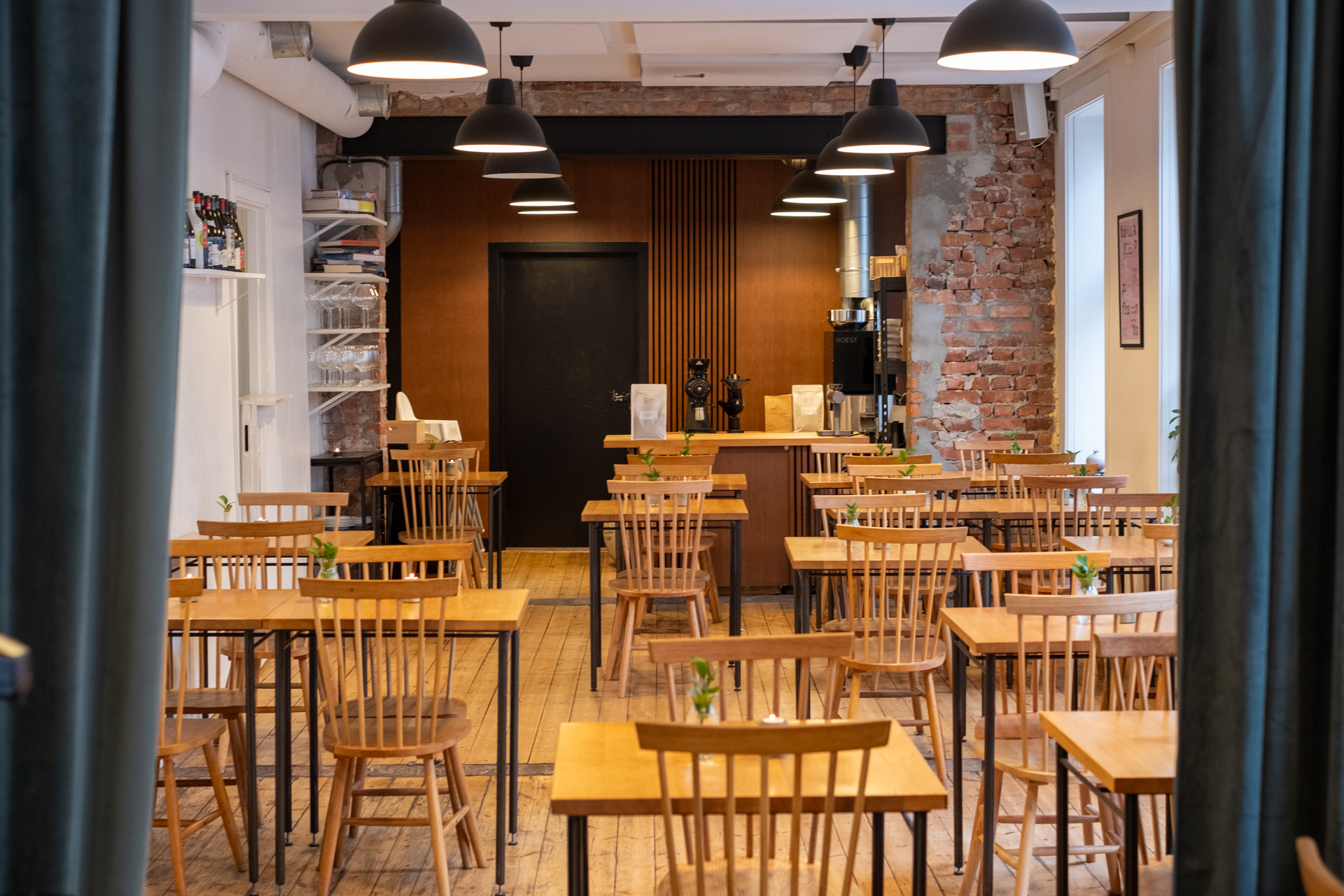
One ordinary Thursday evening, while the new restaurant was just “missing a couple of chairs” before opening, Luke Henderson went home and — without a single trace of premonition — took his own life. “Luke was one of the best chefs I have ever worked with. From high-end fine dining to quick, hearty food, he could literally make anything,” Kristiansen said.
No one knows what exactly went through his mind on that fatal evening, in the same way no one could imagine the pressure she was facing when the sun rose again. Crying would not help, but that was the only thing she could do. Shock, denial, numbness and acceptance — the stages of grief never came in the correct order, but instead mixed each time with something different: anger, rage, regret, curiosity, helplessness — all with the same sharpness of pain.
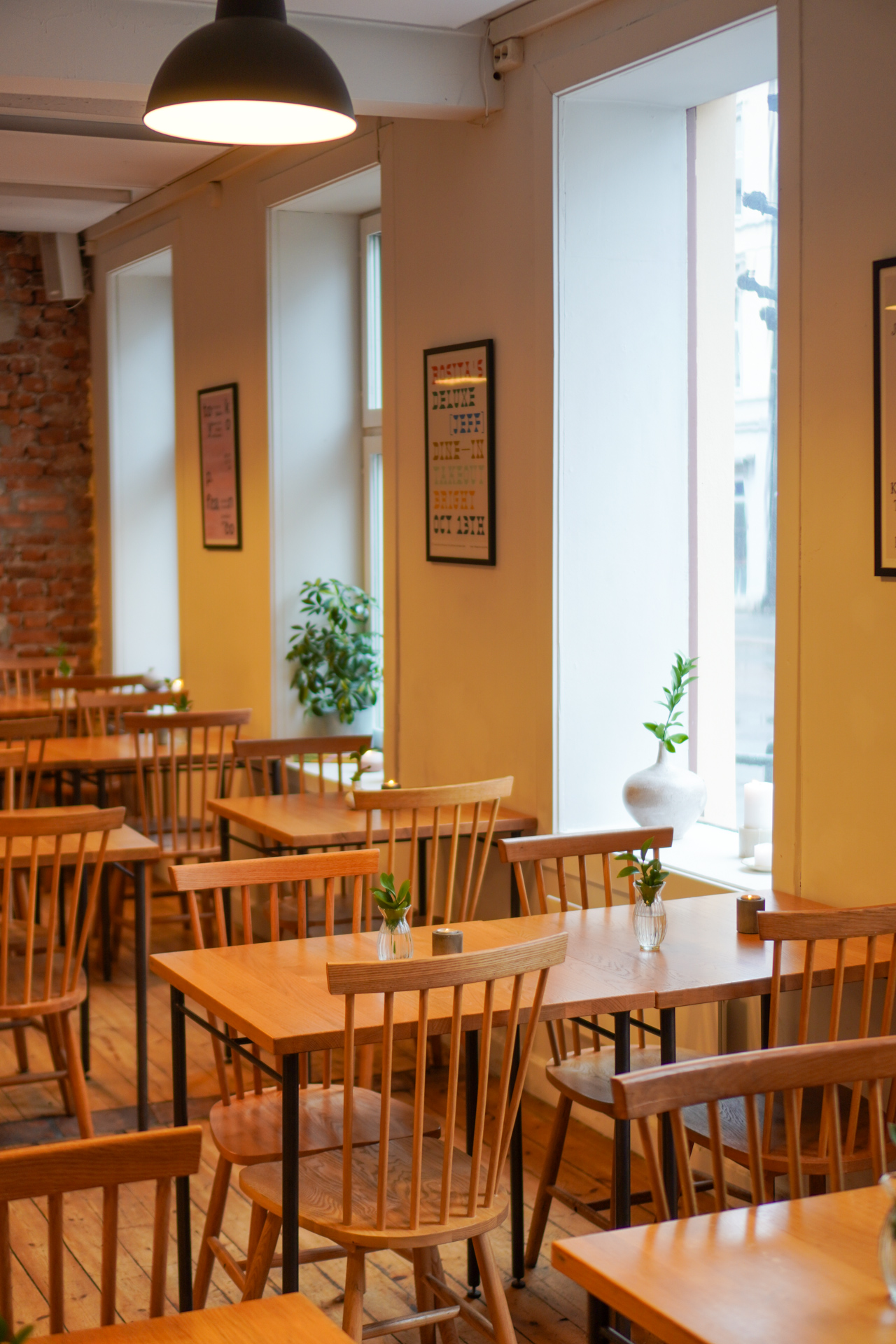
In January 2022, The Little Pickle opened its doors. Two years later, the restaurant received a Michelin Bib Gourmand, an award that highlights “exceptionally good food at moderate prices”, the guide says. But that was far from the end of The Little Pickle’s journey. In January 2025, it opened its own café in its original wine bar area, together with the independent micro-roastery Hibi Kaffe, and quickly became one of Oslo’s busiest cafés at weekends. One year later, The Little Pickle was awarded “New Opening of the Year” by Falstaff, an influential food and travel magazine.
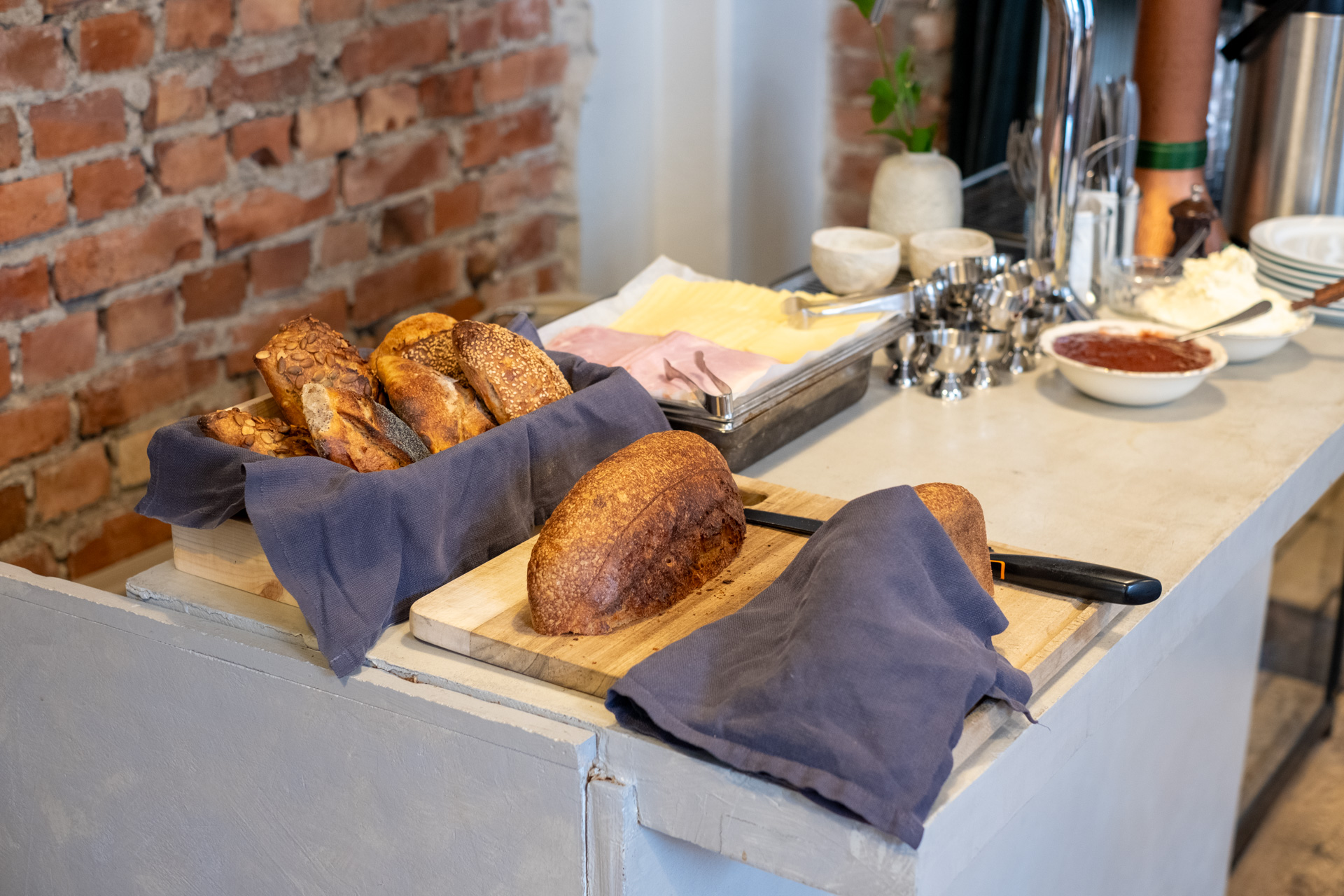
The Little Pickle is one of the few cafés in the city centre that offers breakfast buffet.
The Little Pickle was an undeniable success, but back then, “it was a lot of work”, Kristiansen recalled. When the Michelin inspector came to dine at the restaurant, there were only three people working in total: two chefs busy in the kitchen, while Kristiansen had to help with preparation, manage all the service, and do the cleaning. “We didn’t have the numbers (of customers) at the time — that is just something you have to do,” she added.
When speaking with Kristiansen, one cannot help but notice the contradictions: she fully embraces her Asian roots and identity, yet culturally she is inexorably Norwegian. She has a strong sense of reality — “the numbers” for her are both an anchor and a compass: they mark where she is and dictate where she is going. Yet when it comes to choosing her companions, she relies completely on her “gut feeling”.
The Little Pickle, in this sense, mirrors the contradictory identities of its owner and creator — it is a café centred around two Japanese bakers during the day, and an English cuisine-inspired neighbourhood restaurant in the evening. This particular combination has also given rise to a unique and interesting chemistry between the two separate teams of staff. “Finding good people — the right people — has always been the most difficult job in this business,” Kristiansen said. “I like to say you need to be a bit of a freak to fit in at The Little Pickle,” she added with a laugh. “I am the biggest freak of them all — and I am Asian!”
Asian roots
Born in South Korea in 1982, Kristiansen was adopted, along with her two siblings, by a Norwegian couple when she was two. She had a natural closeness with her adoptive father, and it was through him that she learned to fish and do carpentry. At a young age, she was told about her adoption and the early death of her biological mother due to illness, something that also began to haunt her adoptive mother.
It was the year she turned 20 that she returned to South Korea for the first time. There, she revisited the children’s home and made contact with her biological family, including her grandparents and aunts — but not her father, who had left to work in the United States. Upon returning to Norway, she lost both of her adoptive parents to illness within a few months.
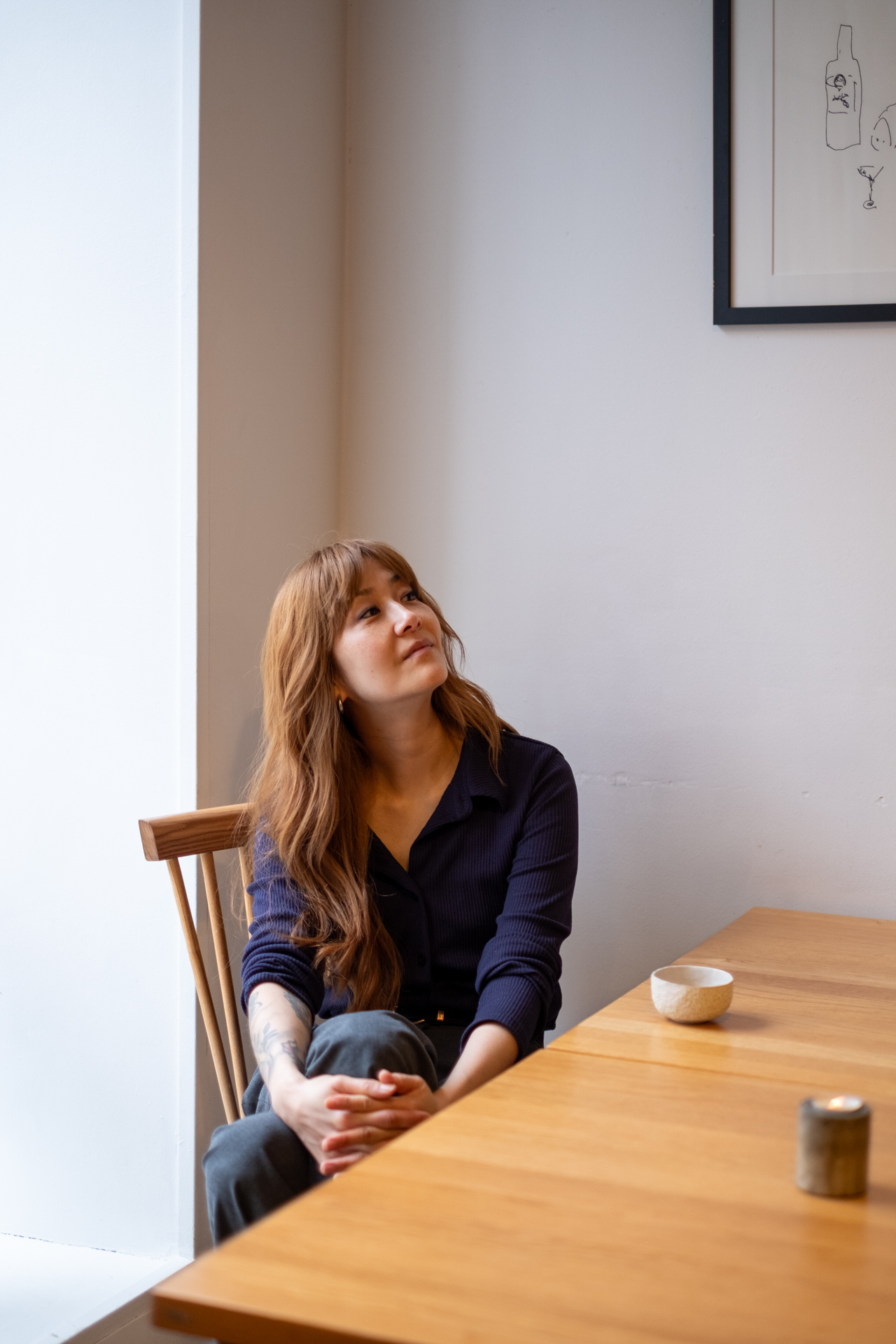
Growing up in Våler with an otherwise completely normal childhood, she was raised with a strong Norwegian belief in independence. “I started working in clothing shops at 14, which was quite common back then, and got my first full-time boutique manager position at 16,” Kristiansen said. Thanks to the job, she moved out of her parents’ house at 16 and spent a year in Moss, where she was “hanging out with some seriously dangerous people”.
Her original intention in moving to Moss was to attend high school, but Kristiansen admitted that traditional schooling never really interested her. Instead, she gravitated towards those “cool, underground” circles. “When you are 16, you have no idea who you are dealing with — you are just fearless,” she said. But a sense of reality soon set in. A year later, wanting a clean slate, she moved to Oslo and began working in the restaurant industry. Nevertheless, the experience made her street-smart and good with people in her early twenties.
First impressions
It was in 2017 that Kristiansen met Luke Henderson for the first time. He was 12 years younger than her and struck her as very shy, but when it came to work, he could be very focused and strict, she said. Only later did she realise that “Luke was actually quite funny”.
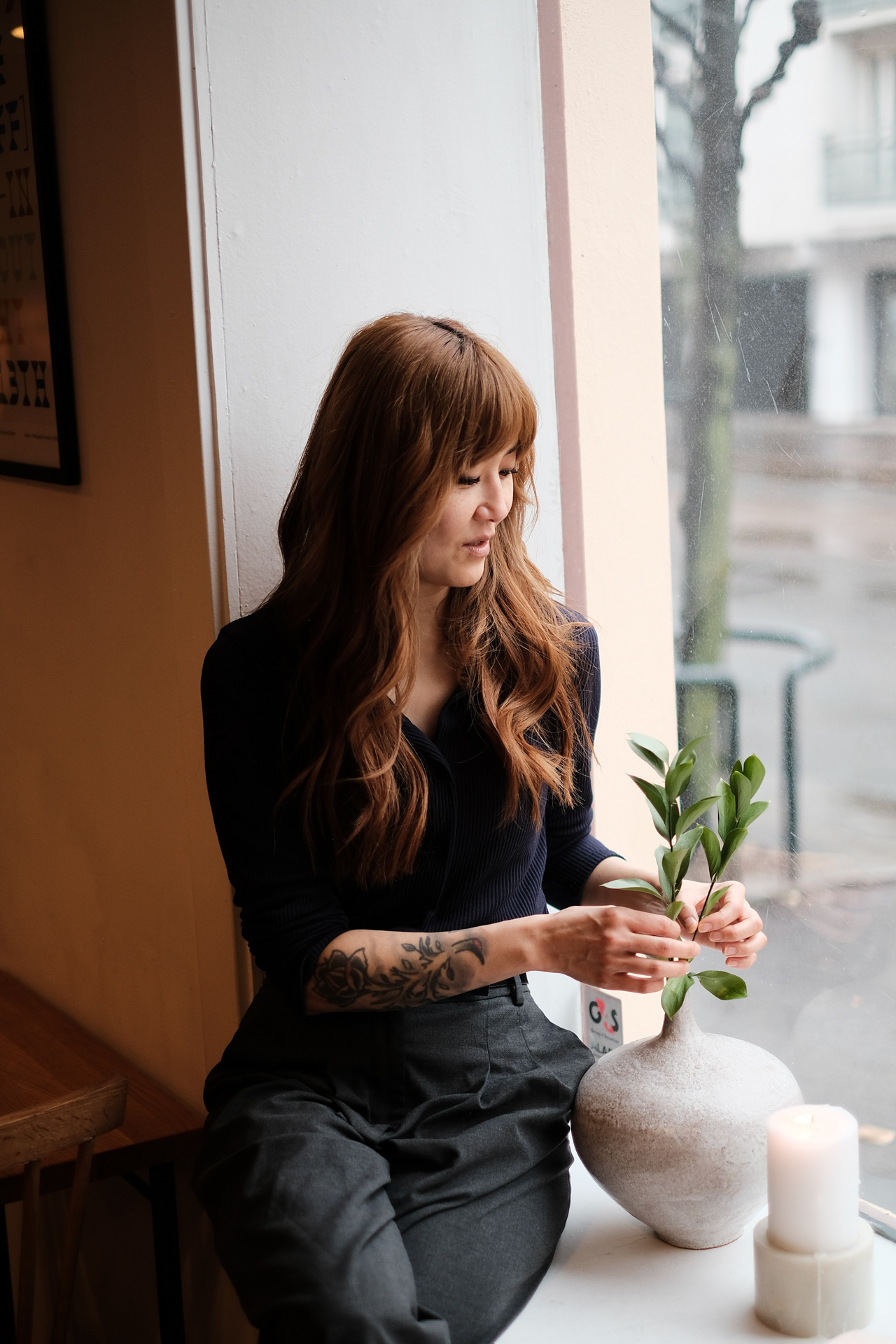
Growing up in a working-class British family, Henderson showed both interest and talent in cooking from a young age. After arriving in Oslo in 2016, his first job was at Maaemo, the city’s only three-Michelin-star restaurant. By the time Kristiansen met him, he had already gained recognition as an up-and-coming young chef in the industry.
“I knew I was hired to work in a supportive role,” Kristiansen said. “Luke is the chef. He decides everything. But the restaurant business is high-pressure. My job is to take the pressure off him so he can focus on the craft,” she added.
Pressure and frustration came in many forms — “the numbers”, the owners, or the daily realities of the kitchen — but working through them together brought Kristiansen and Henderson closer. That was when they began discussing opening a place of their own. “Luke had been seriously bullied in kitchens before, and that was a terrible experience for him,” Kristiansen said. “With The Little Pickle, we knew from the very beginning what to do — and what not to do.”
Identity crisis
Henderson’s passing left a profound gap in the kitchen, and the emotional toll was too heavy for the originally intended head chef — he had to leave. “He came to The Little Pickle because he wanted to work with Luke, and then it became too much for him to handle. I felt very sorry for him,” Kristiansen added.
In the end, Rasmus Hundvebakke — a mutual friend and a young chef who had been hired to work in the kitchen — stepped up and took over Henderson’s role. Filling his shoes was by no means easy, but with the support of Kristiansen and Henderson’s friends, the restaurant opened in 2022.
When the restaurant first opened, people came to show their support after hearing Henderson’s story, but this did not last long. By 2023, factors such as the Covid lockdowns, together with interest rate rises from the Norwegian central bank, had begun to take their toll on the economy, and people started tightening their purse strings. The entire restaurant industry began to feel the strain.
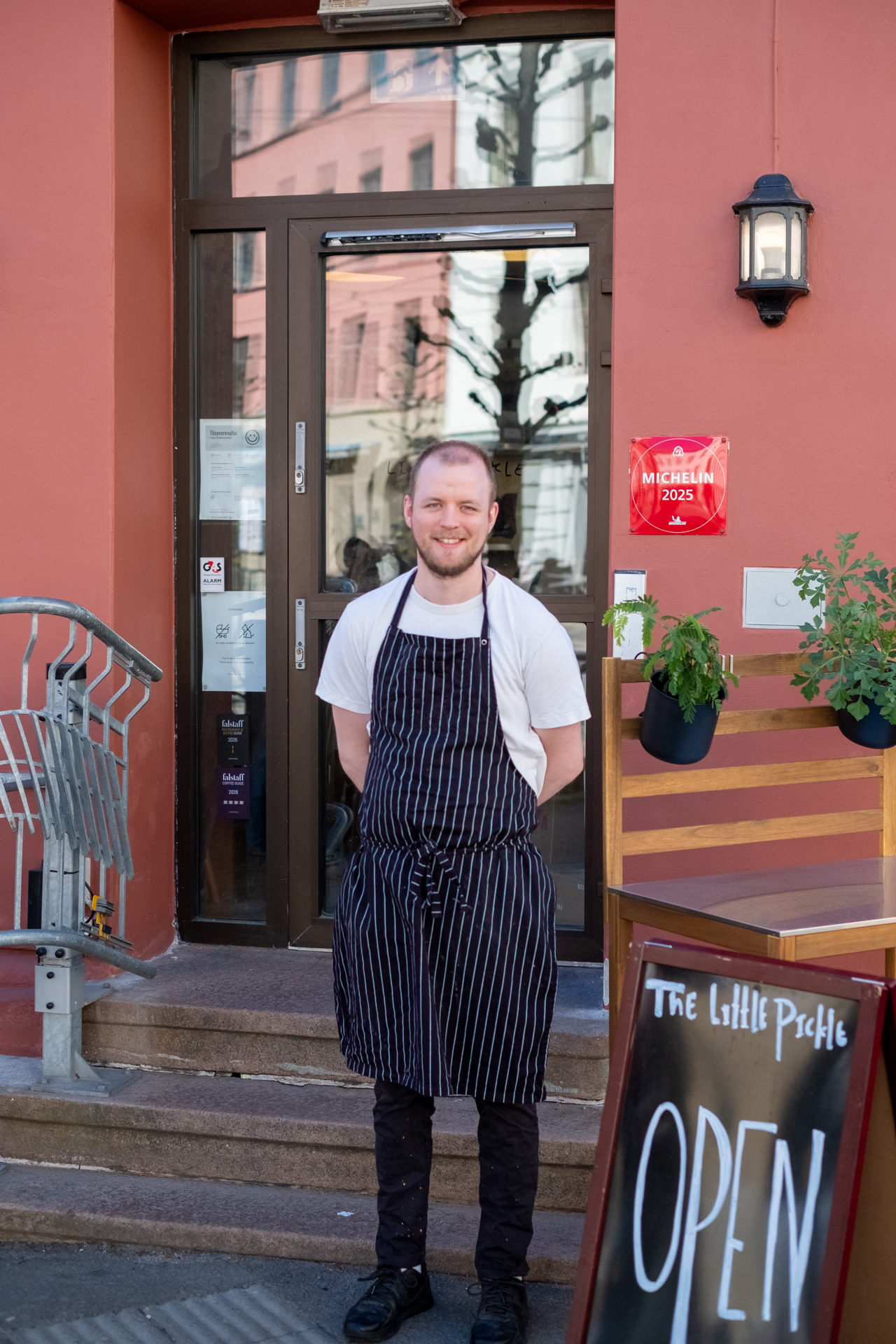
Rasmus Hundvebakke is now head chef in the kitchen.
“We are still honouring Luke and his vision, but looking back now, the menu seemed a bit too long and too expensive — people simply cannot afford it anymore,” Kristiansen said. “In other words, we had a bit of an identity crisis.” By the end of 2023, The Little Pickle recorded a loss of 862,000 NOK, compared with a profit of 587,000 NOK the previous year.
This was one of the most difficult periods in her entire restaurant career, as Kristiansen recalled. “I’m not someone who gives up easily, but at one point I was about a week away from saying this is not possible any more.”
In order to adapt to the changes, Kristiansen decided to return to her roots. “Both Luke and I grew up in the countryside, not in families with much money. As a single mum myself, we just wanted to make good, affordable meals for ordinary people like us in the neighbourhood,” she said. A new, shorter and simpler menu was introduced by Rasmus Hundvebakke — and it was precisely this approach that earned them the Michelin Bib Gourmand in May 2024.
Bakers from Japan
On a sunny February afternoon in 2024, Kristiansen was doing preparation in the empty restaurant when a Japanese man walked in and handed over a bag of sourdough bread that was to be served that evening.
“He told me he was a baker from Ille Brød, but I didn’t know who he was and I hadn’t heard his story yet,” Kristiansen recalled. “I definitely became curious about him — the Asian community in this industry is quite small.”
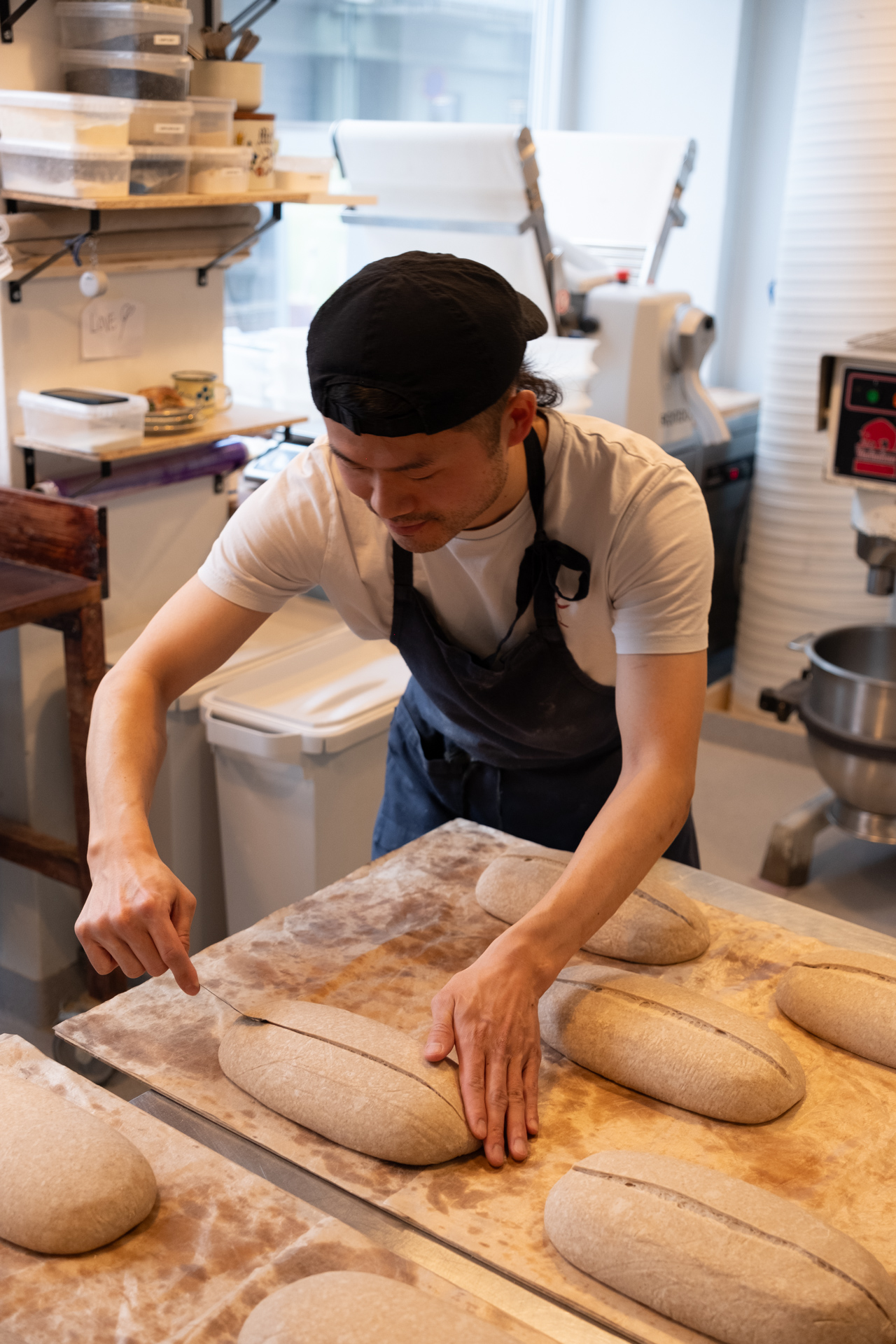
Tsukasa Miyawaki
The Japanese baker, Tsukasa Miyawaki (宮脇司), was both the first customer and the second employee at Ille Brød, one of Oslo’s most renowned sourdough bakeries located just around the corner. Originally trained as an English teacher, Miyawaki came to Oslo on a working holiday visa. While working at Java Kaffebar as a barista, his interest in baking was rekindled. The opening of Ille Brød was an event he could not miss.
“I showed up before Martin [Fjeld], the owner, on Ille Brød’s first day of opening. I started talking with them and asked tons of questions,” Miyawaki said. “A few weeks later, they told me they had an opening, and asked if I wanted to work with them.”
Even today, the first three months at Ille Brød remain some of the happiest memories of his baking career. “It was like Martin’s playground,” he recalled fondly. “Every day we experimented with something new, and I absorbed as much knowledge as I could.”
When his visa expired, Miyawaki returned to Tokyo in 2018 and accepted a full-time position as a baker. Before leaving Europe, and through Martin Fjeld’s network, he spent his final months “flying at least 20 flights”, visiting some of the best bakeries across the continent.
Over the next five years, Miyawaki established Tokyo’s first Nordic-style sourdough bakery, Vaner, which became a huge success. “After we announced we were going to close, even more people came to the shop to try our bread. Some days, they had to queue for at least four hours,” he said.
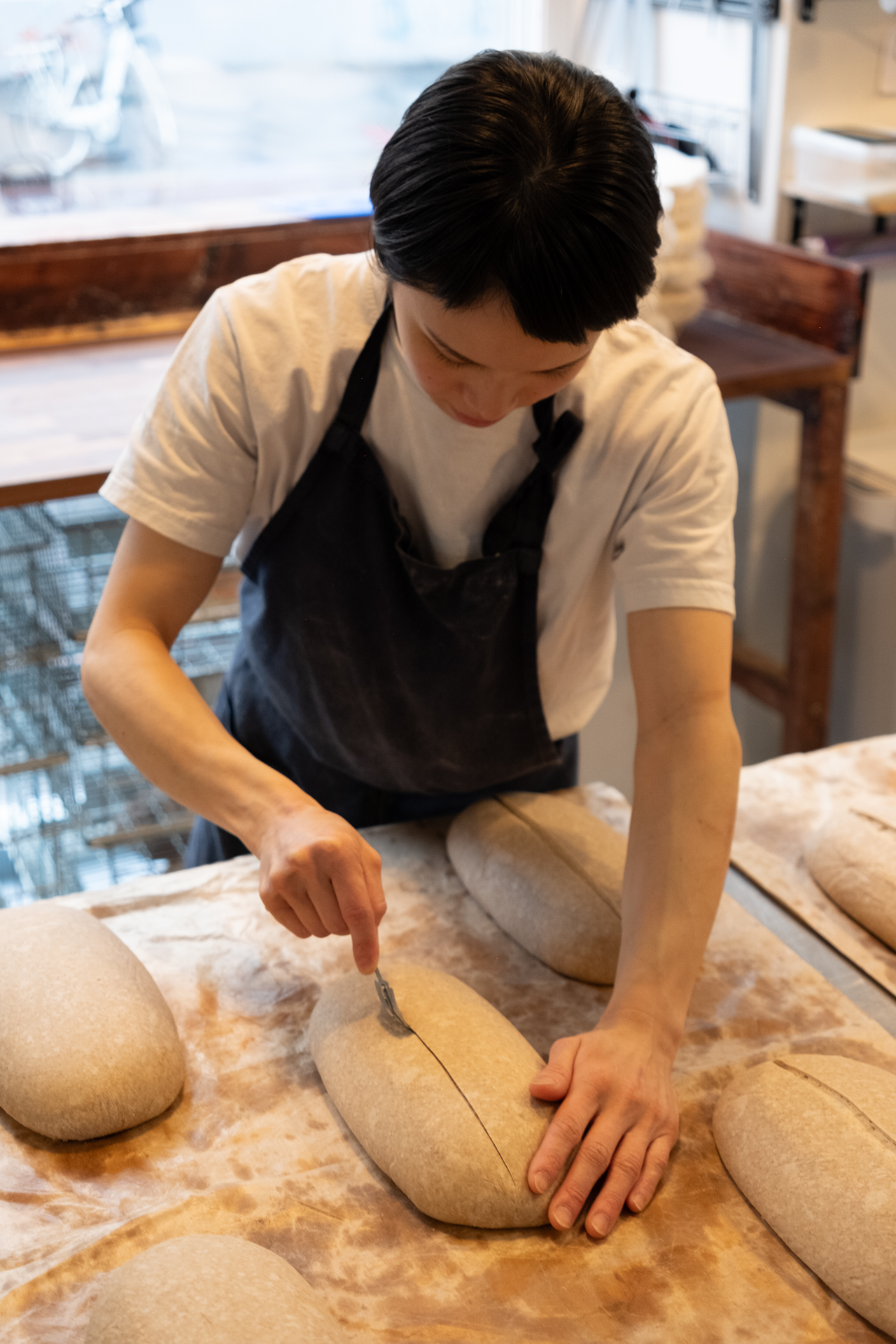
Nozomi Miyawaki
The reason they decided to close the shop was that “it was not sustainable”, Miyawaki explained. “For the first three years, I barely slept more than three hours a day. It was a lot of work and a lot of stress.” Yet those demanding years also brought some of the greatest rewards. It was at Vaner that he met his wife, Nozomi Miyawaki (宮脇のぞみ), who worked as a pastry chef. “Nozomi was trained in busy pastry shops, so she was extremely good at planning and improving efficiency. She made our life at Vaner much easier,” he said. “But in the end, it was still too much — we didn’t have any life.”
By the end of 2023, an opening at Ille Brød brought the Miyawakis back to Oslo. A few months later, Tsukasa Miyawaki came to The Little Pickle to deliver that bag of bread and met Sandra Kristiansen. “My first impression of Sandra was that she was very nice,” he recalled. “It was a sunny afternoon and the restaurant was empty, and looking at the big windows, I just thought: this is such a nice space.”
A new bakery
What the Miyawakis did not expect was that Ille Brød was also going through some of its toughest years since opening. It won Matprisen 2021, one of the most prestigious awards in the Norwegian food industry, and was voted the best bakery in Oslo in 2022 by readers of Aftenposten, one of Norway’s largest newspapers. Behind these achievements, however, lay significant financial struggles. The bakery relied heavily on business and restaurant clients, but such sales did not generate sufficient profit. As a result, it had been running at a deficit in most years, except for 2021.
By the time Miyawaki met Kristiansen, discussions of restructuring and lay-offs at Ille Brød were already underway. Due to their proximity, the Miyawakis had dinners with their Ille Brød colleagues at The Little Pickle. “I noticed Sandra started stalking us on Instagram,” Tsukasa Miyawaki said, half-jokingly. Kristiansen was looking for ways to extend opening hours and attract more customers, while the bakers were facing uncertainty at work — a new bakery at The Little Pickle seemed like an ingenious solution that could solve everyone’s problems.
After several initial discussions, the bakery remained only an idea on paper. Then, one day in March, according to Kristiansen, the Miyawakis suddenly arrived at The Little Pickle in the middle of the working day and said: “We’ve quit our jobs! Do you still want to start a bakery together?”
“I was not prepared at all. There were only three people working at The Little Pickle — no money, no staff, nothing,” Kristiansen recalled with a grin. “But I looked at them and just thought: hell, this is going to happen.”
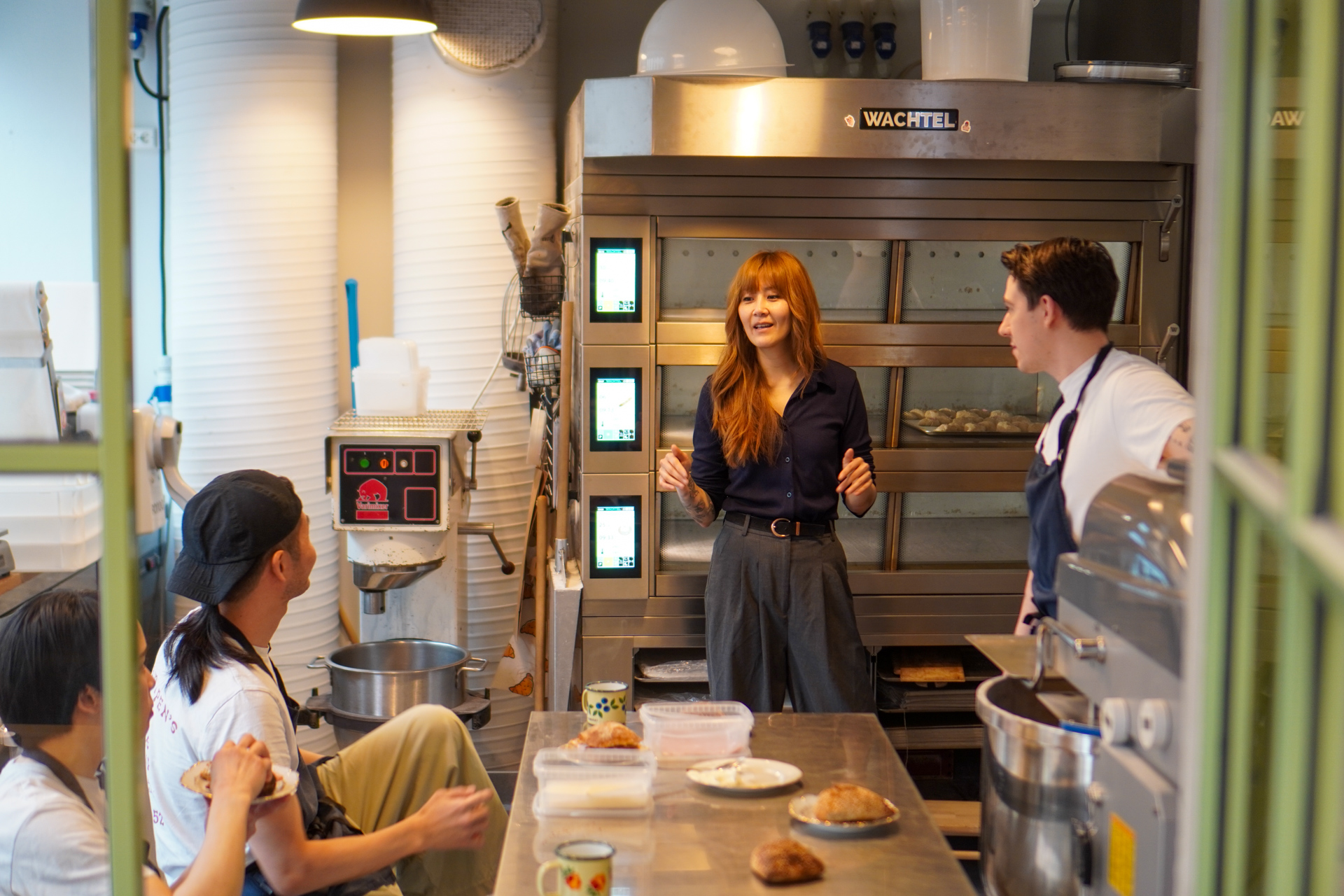
Morning meeting before the café opens.
Kristiansen immediately began making calls. Meanwhile, to raise initial seed money and test the concept, the bakers organised a six-day Easter pop-up in the space, which attracted widespread attention. One elderly neighbour tried choux — a classic French cream puff pastry — for the first time at the pop-up and immediately fell in love with it. After the café opened, he became a regular, dropping by almost every day. Sometimes, he even drove out with the Miyawakis to shop for antique furniture. “He grew really fond of them, treating them like his grandchildren,” said Haruna Yamashita Flaaseth (山下春菜), who was later hired as café manager at The Little Pickle.
Hibi Kaffe
While Kristiansen was tapping into her network, the bakers were also spreading the word within the Japanese community. Ayae Maki Fredheim (真木彩衣), who had been working as a barista and later as a roaster in Oslo since 2014, was looking for a space to start her own micro-roastery. It was the year she had her son, and opportunities arose unexpectedly. While out walking with him, Fredheim bumped into the Miyawakis and heard about the new bakery. They returned to Kristiansen and told her about Fredheim’s plans.
“But I know Ayae!” Kristiansen said. Their paths had crossed years earlier when she worked with Luke Henderson. Working under the same company, Fredheim had visited the restaurant to prepare machines and train baristas, leaving Kristiansen with a strong impression. She immediately called Fredheim, and it was decided on the spot that she would rent space within The Little Pickle and launch her own independent roastery.
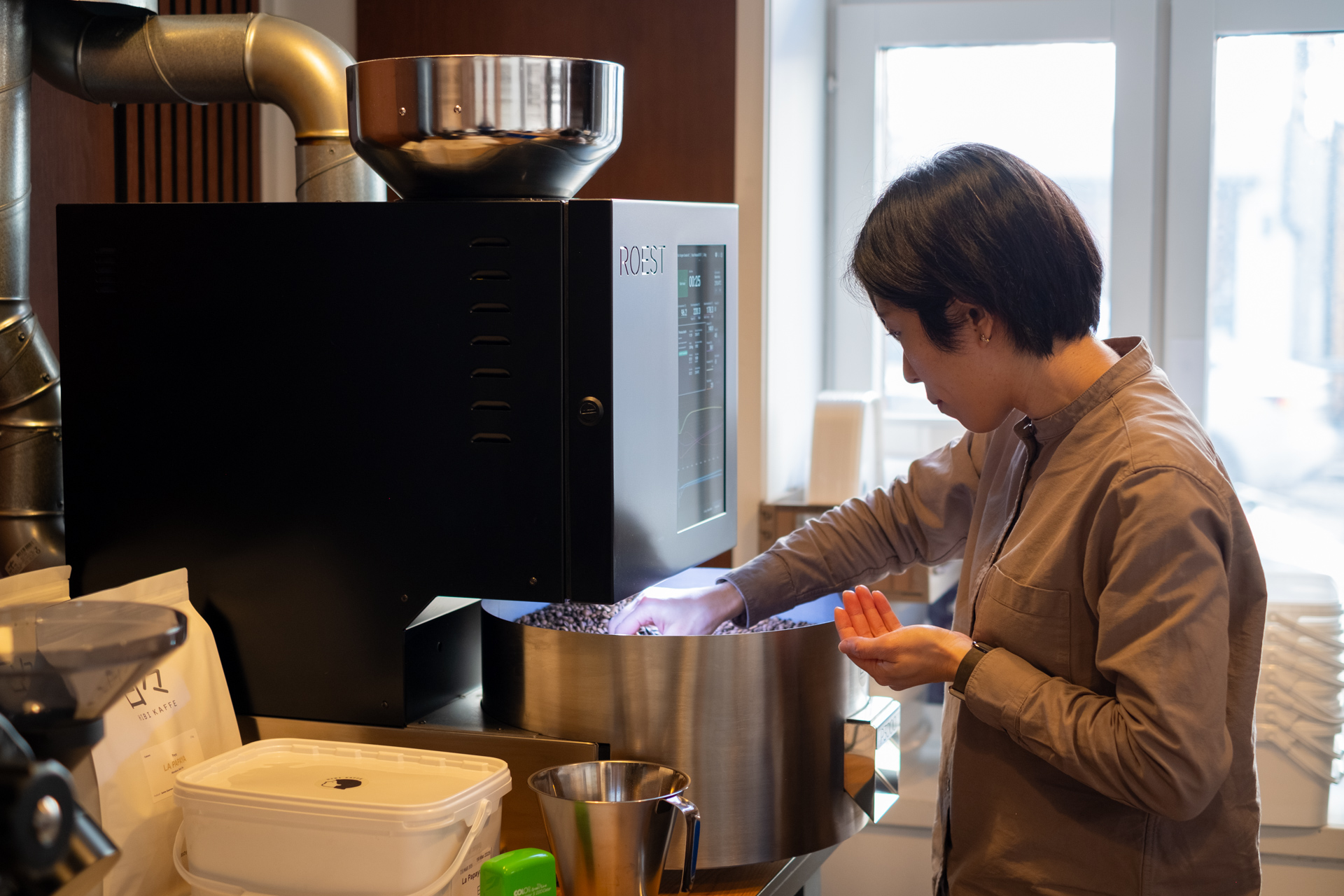
Ayae Maki Fredheim
“Without Sandra and The Little Pickle, Hibi would not be possible,” Fredheim said. Even the name Hibi Kaffe was chosen with Kristiansen’s encouragement. “At first, I was considering a Norwegian name, but Sandra convinced me to stick with a Japanese identity,” she explained. In the end, she chose Hibi, meaning “daily” in Japanese.
During the early planning stages, Haruna Flaaseth frequently helped out at the shop. With a background in graphic design and several years of experience as a barista alongside Fredheim, she stood out to Kristiansen as the ideal person to run the café.
“The interview went terribly!” Flaaseth said with a laugh. “Sandra was interviewing me for the café manager role, but I thought she just wanted me to work occasionally as extra help.”
At the same time, she received another offer — from none other than Tim Wendelboe, Oslo’s most renowned coffee shop. Faced with a choice between a prestigious, established name and a brand-new café, Flaaseth found the decision difficult.
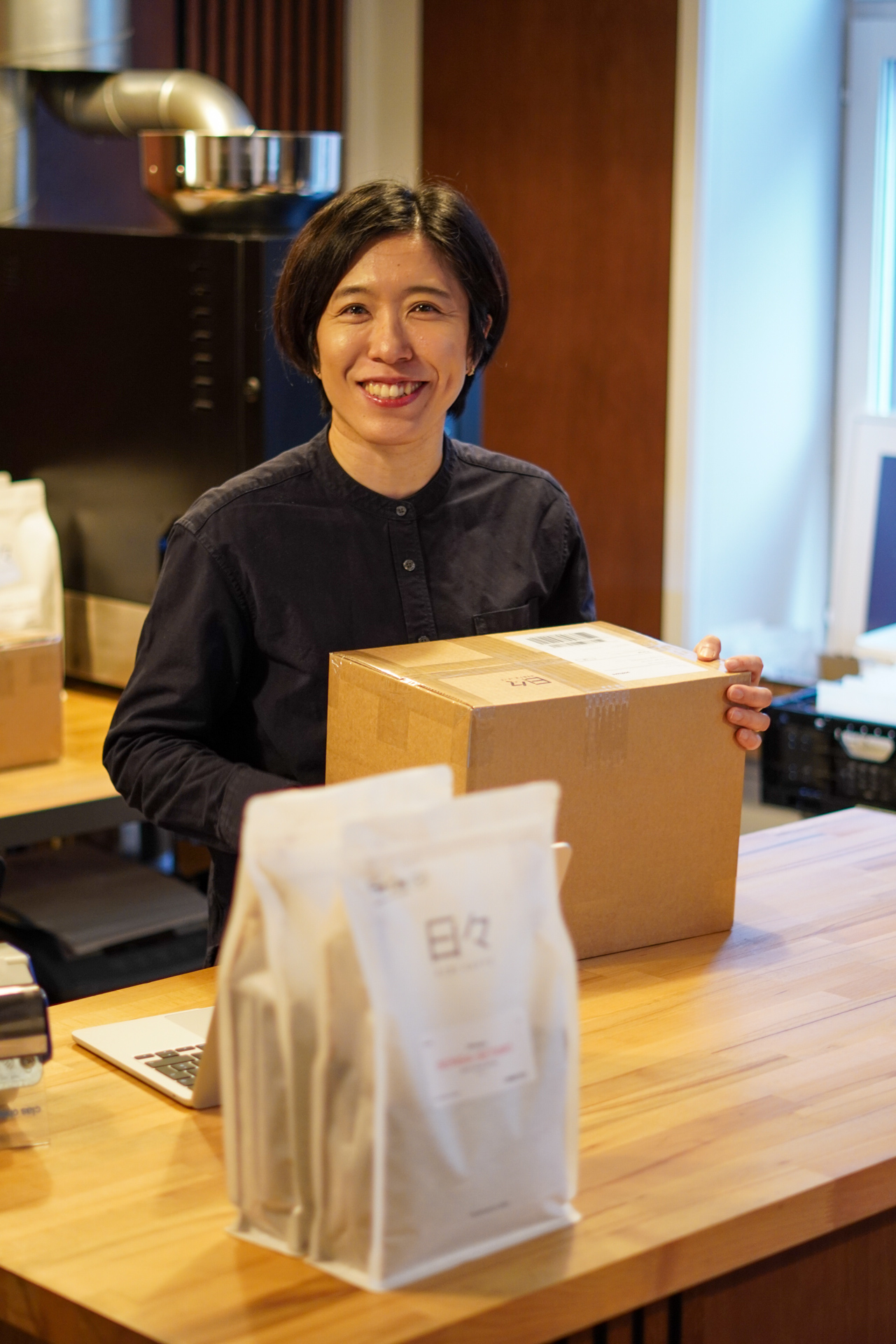
It was a conversation with Kristiansen that ultimately made up her mind. “Sandra didn’t promise anything — she simply said she respected my choice and felt lucky to have found me,” Flaaseth said. “That made me feel seen for who I am.”
“Sandra is different from typical owners and managers,” Tsukasa Miyawaki added. “She is very human, and we spend time together like friends.” Hibi Kaffe officially launched in November 2024. All eyes then turned to the bakery.
Time scramble
As spacious as The Little Pickle was, adding a bakery still required extensive renovation. The original wine bar was removed and replaced with a coffee counter. From the beginning, the bakers envisioned an open workspace behind glass, allowing customers to watch the preparation process and feel more connected.
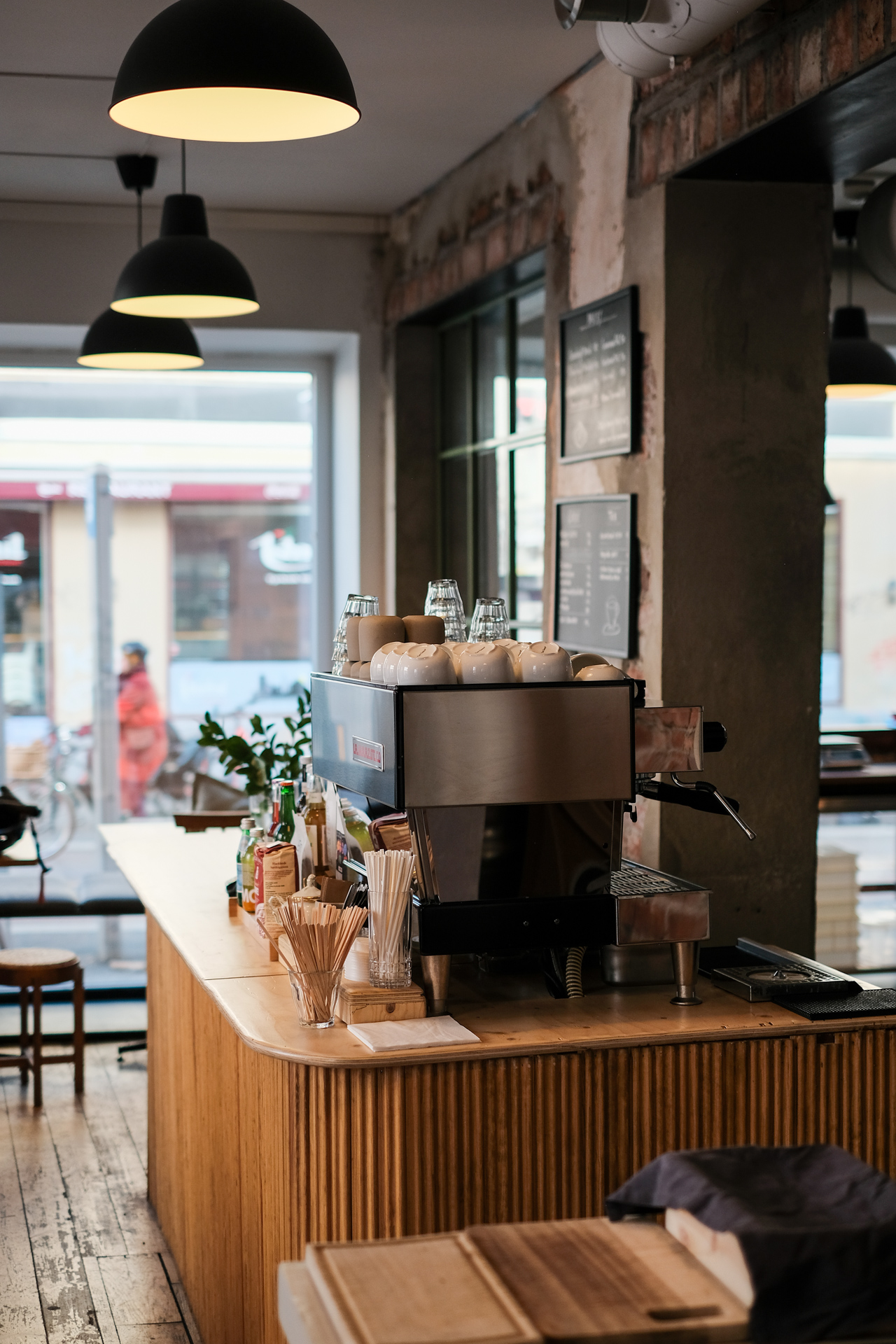
With the final machines arriving in December, the renovation was still unfinished, and fewer than 20 days remained before opening. “It is always a race against time. With all my years of experience, I knew this would work,” Kristiansen said.
It was all hands on deck. While Kristiansen and Flaaseth handled carpentry and painting, the bakers faced an even greater challenge — baking. Everything was new: mixer, ovens, fridge, flour. The first loaves they produced were as flat as American pizza. “Nothing we made was sellable,” Tsukasa Miyawaki recalled.
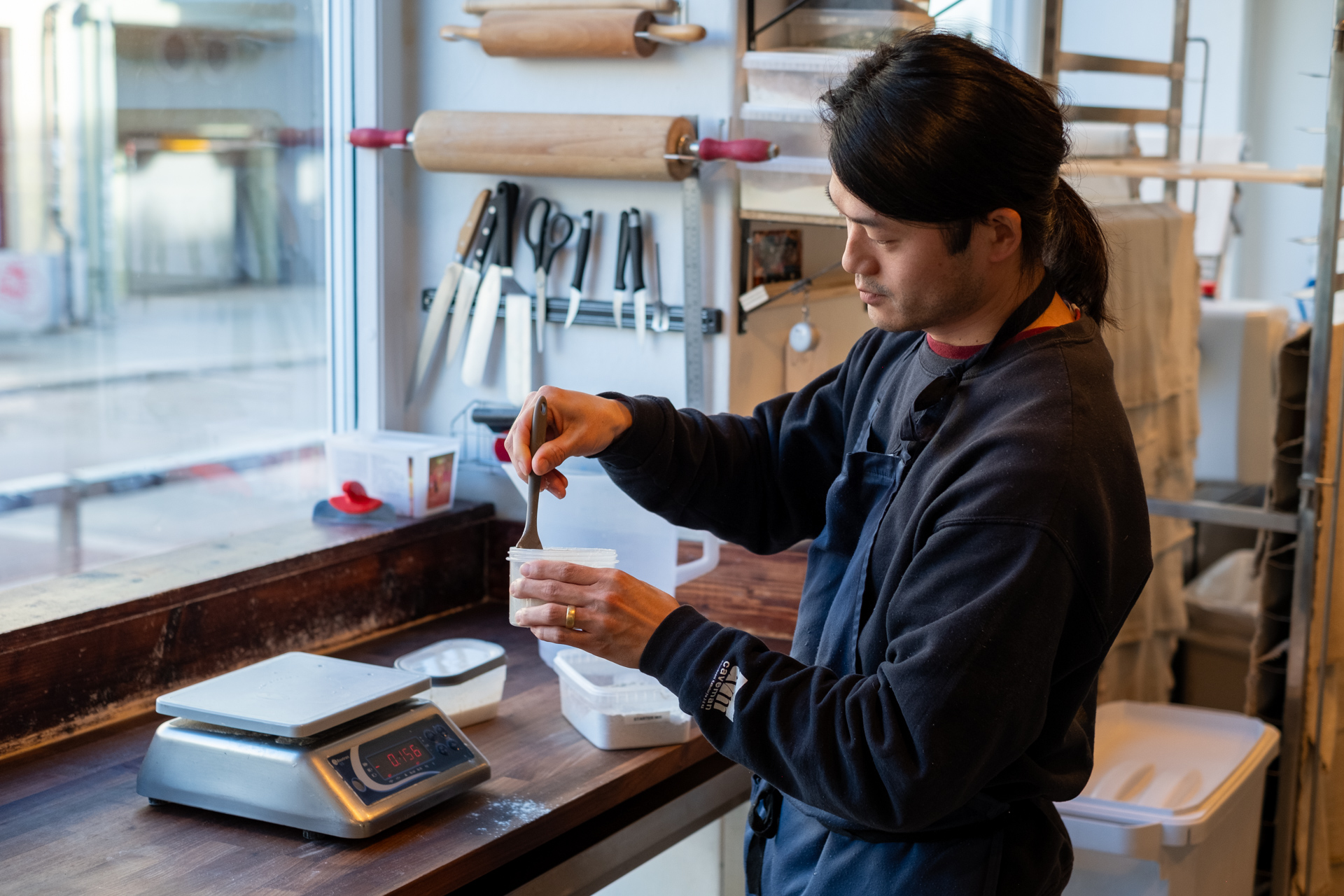
Even for experienced bakers, new equipment combined with unfamiliar flour introduced too many variables. Old recipes and routines no longer worked. With the clock ticking, the couple worked day and night, adjusting both techniques and machinery.
“We were working like crazy, marking each day of the countdown with a big red cross on the calendar,” he said. “I still remember: ‘Day 20: everything failed’, ‘Day 18: baguette experiment failed again’… It wasn’t until the last three days that we saw progress — ‘Day 3: croissants worked’, ‘Day 2: buns worked’ — and then it was opening day.”
Japanese craftsmanship
Opening day was a success. Neighbours, industry professionals, and media all gathered, much like when the Michelin Bib Gourmand was announced. The café quickly became known by many as “the Japanese café”. Yet unlike Hibi Kaffe, the bakery had never actively promoted itself as Japanese.
The bakers did not mind the label. “We are Japanese,” Tsukasa Miyawaki said. “But many people don’t realise that Japanese baking is a completely different style — and what we do here is purely Nordic. If anything, I would describe it as Japanese craftsmanship.”
Fredheim agreed: “If we emphasise our Japanese identity, it is through consistency of quality.” Today, Hibi supplies coffee to Farine bakery, Panu restaurant, and the three-Michelin-star Maaemo. In February 2026, it received the Falstaff Nordics Award for Best New Opening in Norway.
Happy bakers scale down
With the café’s opening, The Little Pickle grew from a team of three to 19 employees. On weekdays, one barista covers the morning to mid-afternoon shift, while weekends require at least three staff members. “Weekends have always been busy, and now weekdays are picking up too,” Flaaseth said.
The café and restaurant are run by separate teams, as “they each have their speciality,” Kristiansen explained. Café staff need coffee expertise, while restaurant staff must be knowledgeable about wine.
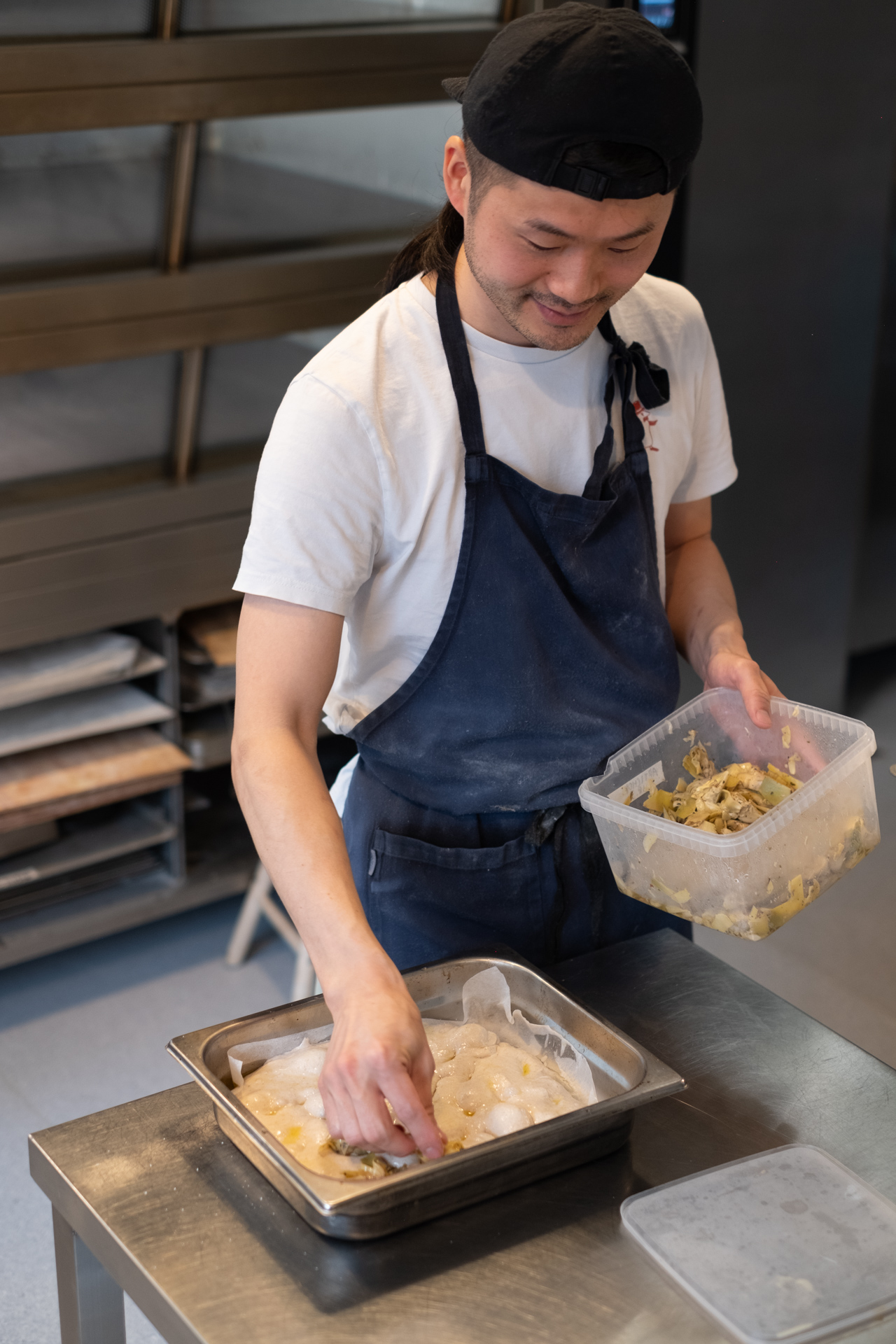
Chef Rasmus Hundvebakke increasingly collaborated with the bakers. “He has always been curious about baking, and now he understands our craft much better,” Tsukasa Miyawaki said. In turn, the bakers also drew inspiration from the kitchen.
One example is a focaccia topped with hazelnuts and artichoke, developed together with Hundvebakke. “The chef brings a palate for ingredients, while we focus on grain flavour and gluten development. Without Rasmus, this wouldn’t be possible,” Miyawaki said. “These collaborations can only happen here.”
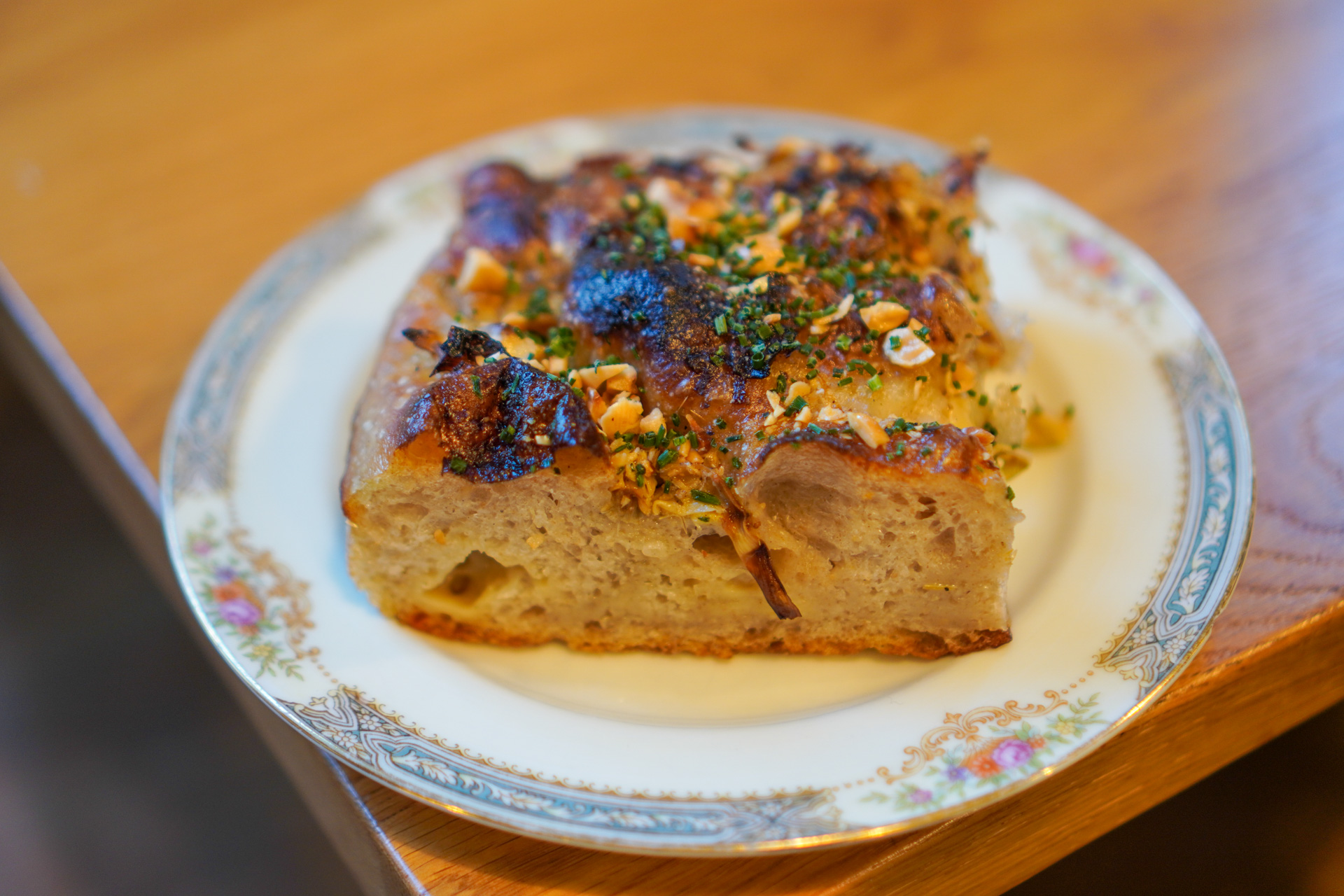
The focaccia is the result of a collaboration between the bakers and the chefs.
Although structurally independent, Hibi Kaffe remains closely connected to the team. “When the café is busy, I help make coffee, and when I need to bring in large shipments of beans, they help me carry them,” Fredheim said.
Equally important is visibility. By roasting in-house, The Little Pickle can serve the freshest coffee, while Kristiansen’s network helps expand Hibi’s reach. “When restaurant owners visit, they experience the coffee directly — it’s very different from roasting in a basement and trying to sell it,” Fredheim explained. “We are two female entrepreneurs under one roof, supporting each other.”
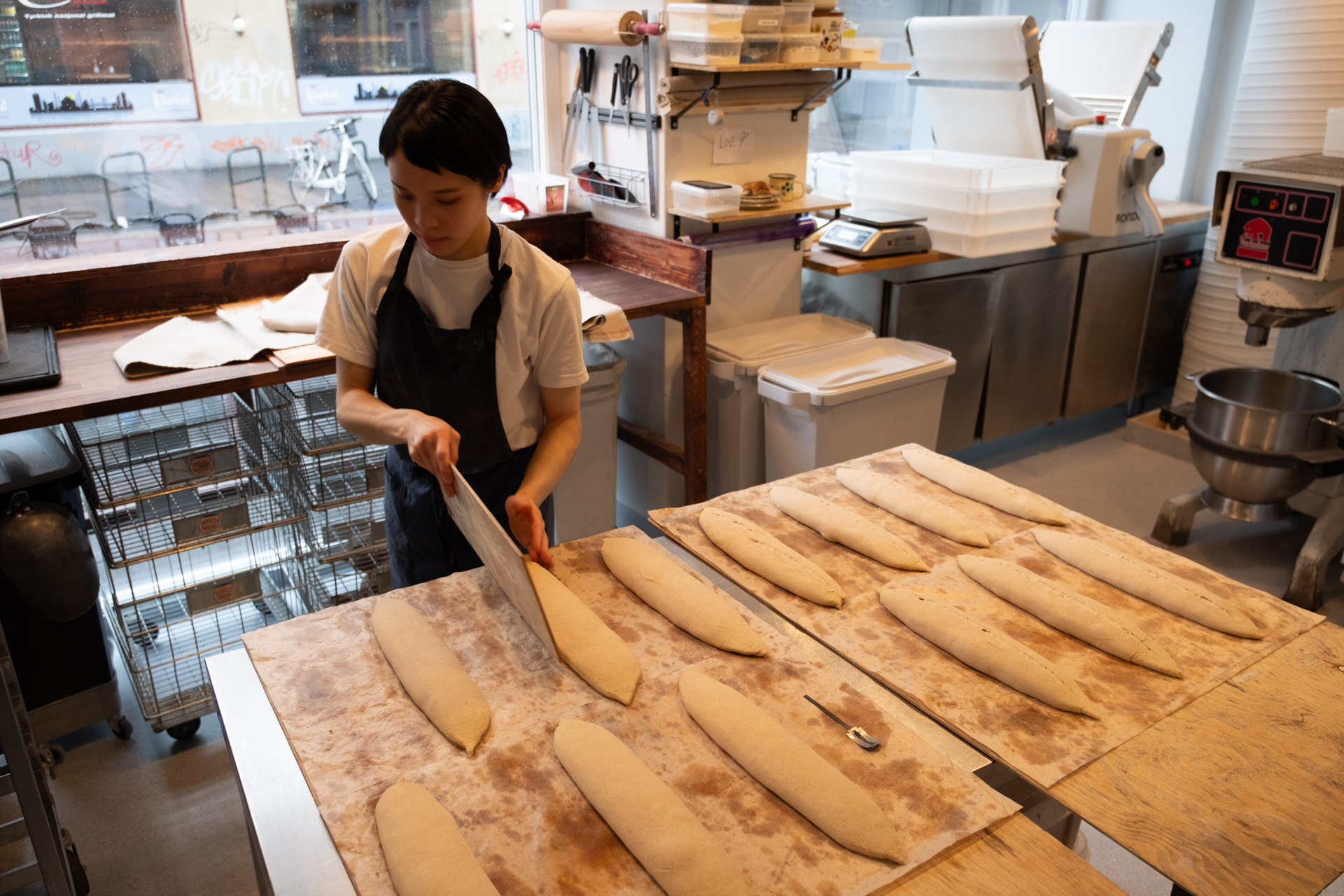
Despite the workload, the bakers have finally found the balance they long sought. Since the intense days at Vaner, the Miyawakis have embraced the philosophy of “happy bakers” — “happy people make good products”.
Now their schedule is more regular. Finishing work around 3 pm, Tsukasa Miyawaki plays guitar while Nozomi Miyawaki knits. “I keep telling them: scale down. We are humans, not machines,” Kristiansen said. “They are doing a great job every day — no need to push too hard.”
At the same time, their passion remains. “Tsukasa and Nozomi are always talking about bread, even outside work,” Flaaseth observed. “My long-term goal is to still be baking in my seventies,” Tsukasa Miyawaki added. “I don’t mind where — I just want to keep improving.”
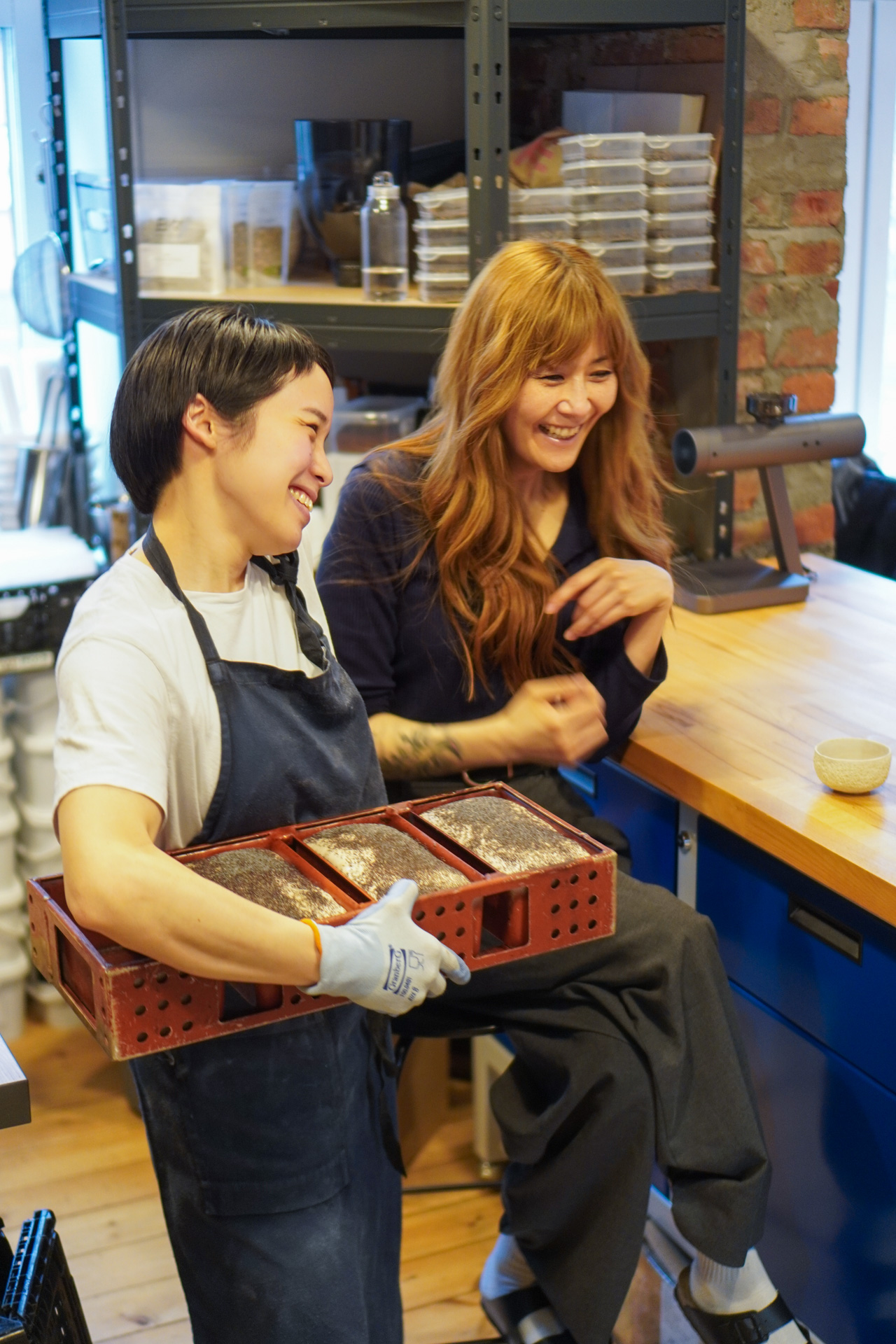
Gregory Mountanos, a former barista, described the café as “like a big family”. “Sandra is always there, working alongside the team. She’s funny, positive, always in a good mood,” he said.
“This is why I say you need to be a bit special to fit in here,” Kristiansen laughed. “We are a group of very special people — and I want The Little Pickle to stay that way. We will never expand.”
Looking back, Kristiansen still considers opening the café “the best decision ever made”. Her journey with The Little Pickle has never been an easy one, but as the café and restaurant continue to grow, so does their recognition. Still, she knows that in this industry, the risks always remain. Her natural optimism, experience learned the hard way, resilience, and relentless work ethic have given her confidence and composure. Whatever the future brings, she is ready. As Shakespeare once put it — “What’s past is prologue.”